8.582 s
Famoso · 1/4 mile
Famoso Raceway, California, on standard Michelin Pilot Sport 4S road tyres: the world's fastest-accelerating production car. Driven by Brooks Weiselblat of DragTimes — 11 consecutive launches, no degradation.
RIMAC AUTOMOBILI · CROATIA · EST. 2009
The electric hypercar named after a sudden Adriatic storm
A hypercar company that started in a garage.
At 19, Mate Rimac converted his drift-and-track E30 to electric power — the e-M3. It eventually produced around 600 hp and 900 Nm, reached 100 km/h in 3.3 seconds, and set five world records for electric vehicles. In 2009, Rimac Automobili was founded in Sveta Nedelja, near Zagreb, Croatia.
"Honestly, when I started to tinker with my first car in a garage, I couldn't have even dreamt of being where we are 15 years later. There were so many times in the early years that we really thought the company wouldn't make it."
Nevera — Croatian for a sudden, violent storm over the Adriatic: fast, fierce, and charged with lightning. On June 1, 2021, the production C_Two arrived under this name.
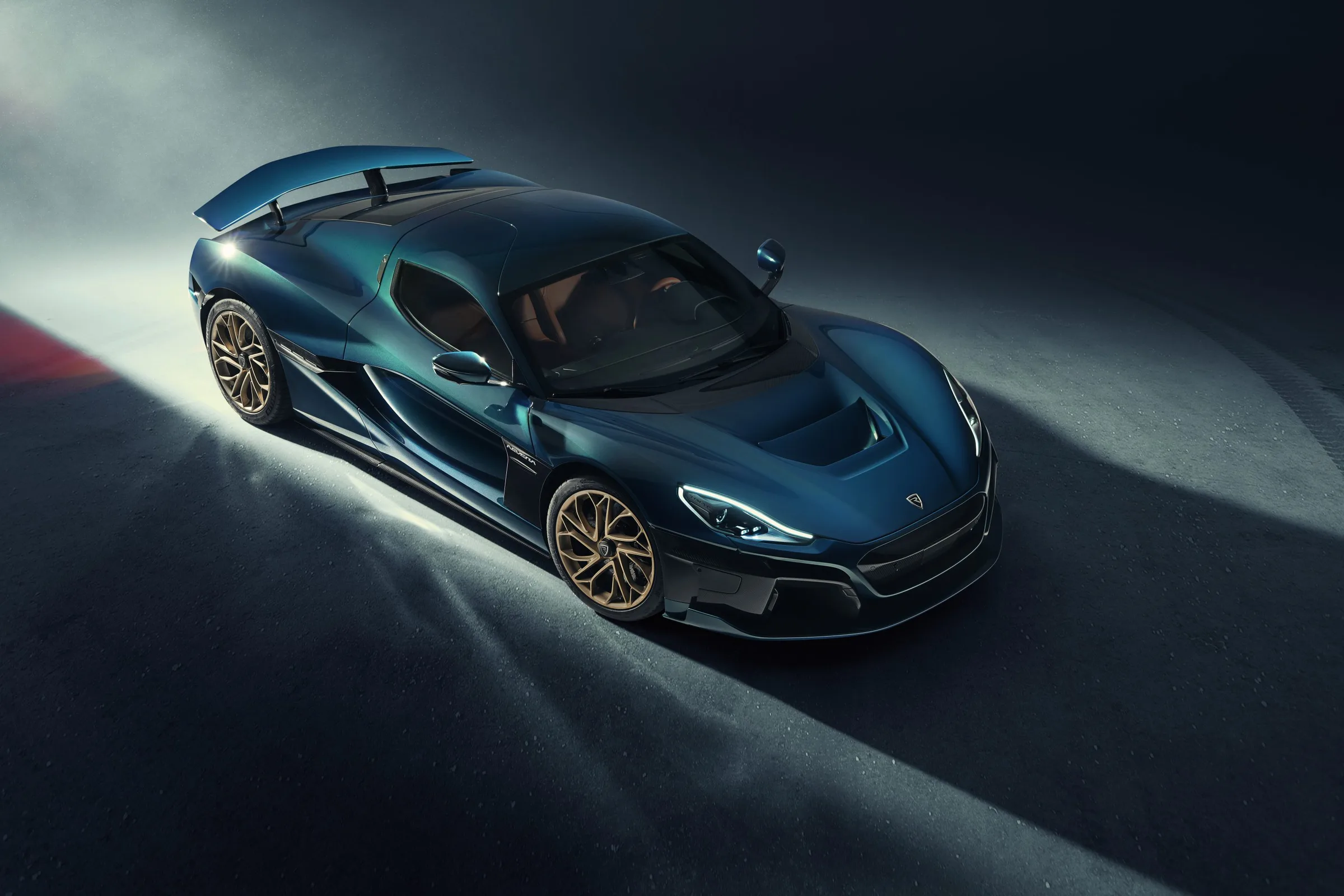
Nevera is limited to 150 units, each hand-built in Croatia, then personally tested and signed by Mate Rimac before delivery. 1,914 hp, 258 mph, around €2 million — in 2021, no production EV had come anywhere near those numbers.
DESIGN
The 'cravat' motif running through the body honors 17th-century Croatian necktie culture, first used on the 2011 Concept_One; on the Nevera it also helps guide airflow.
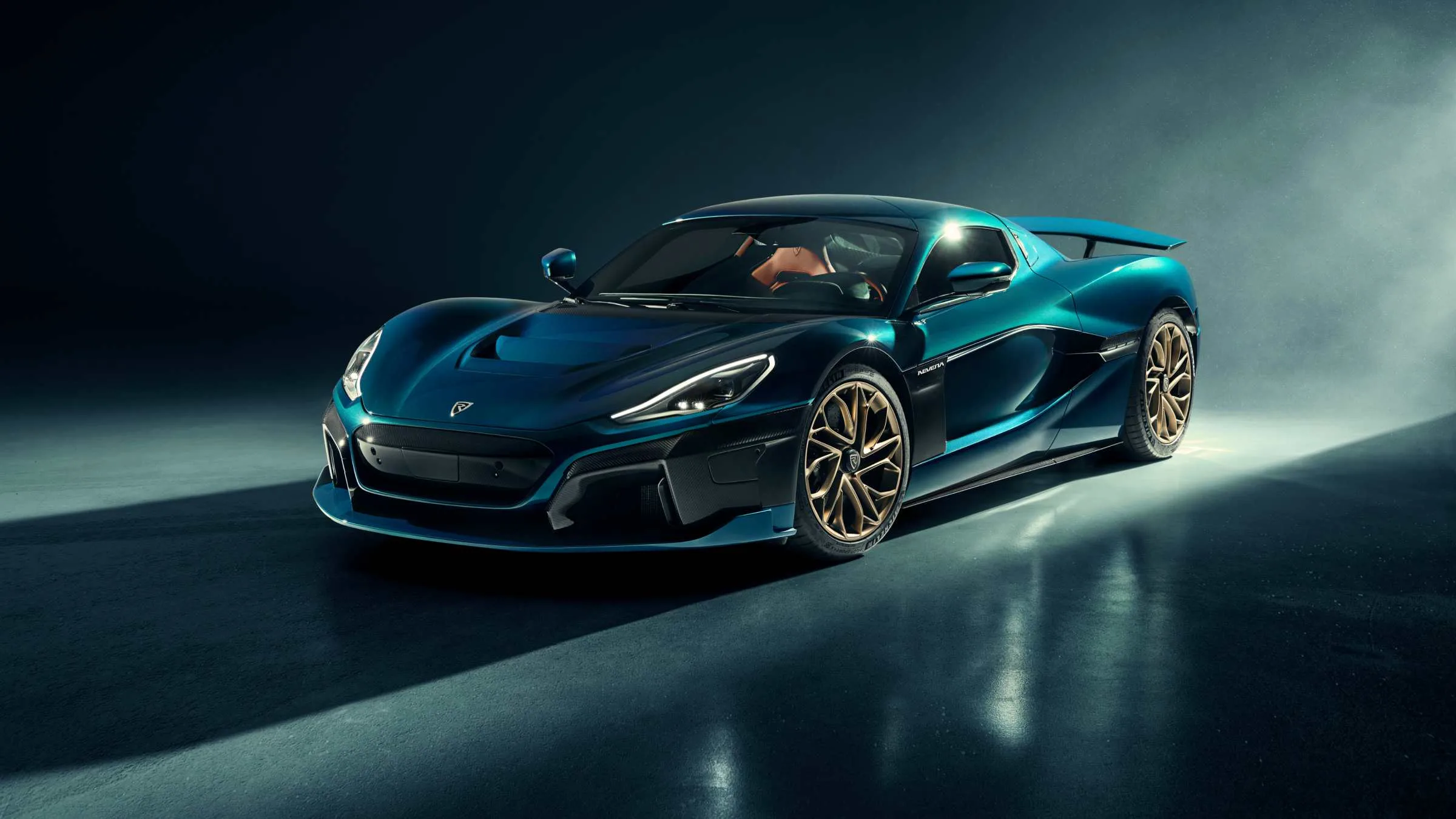
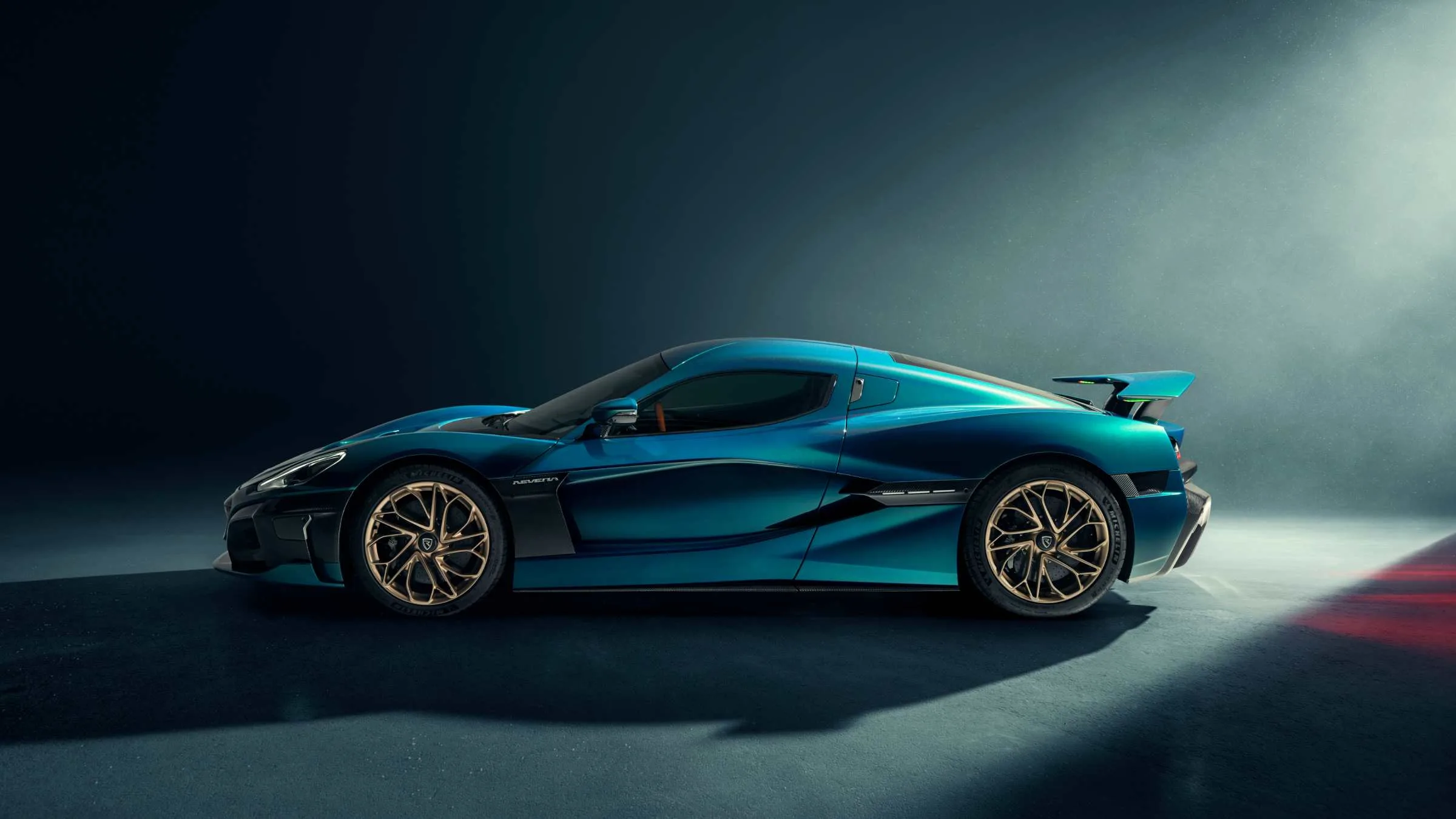
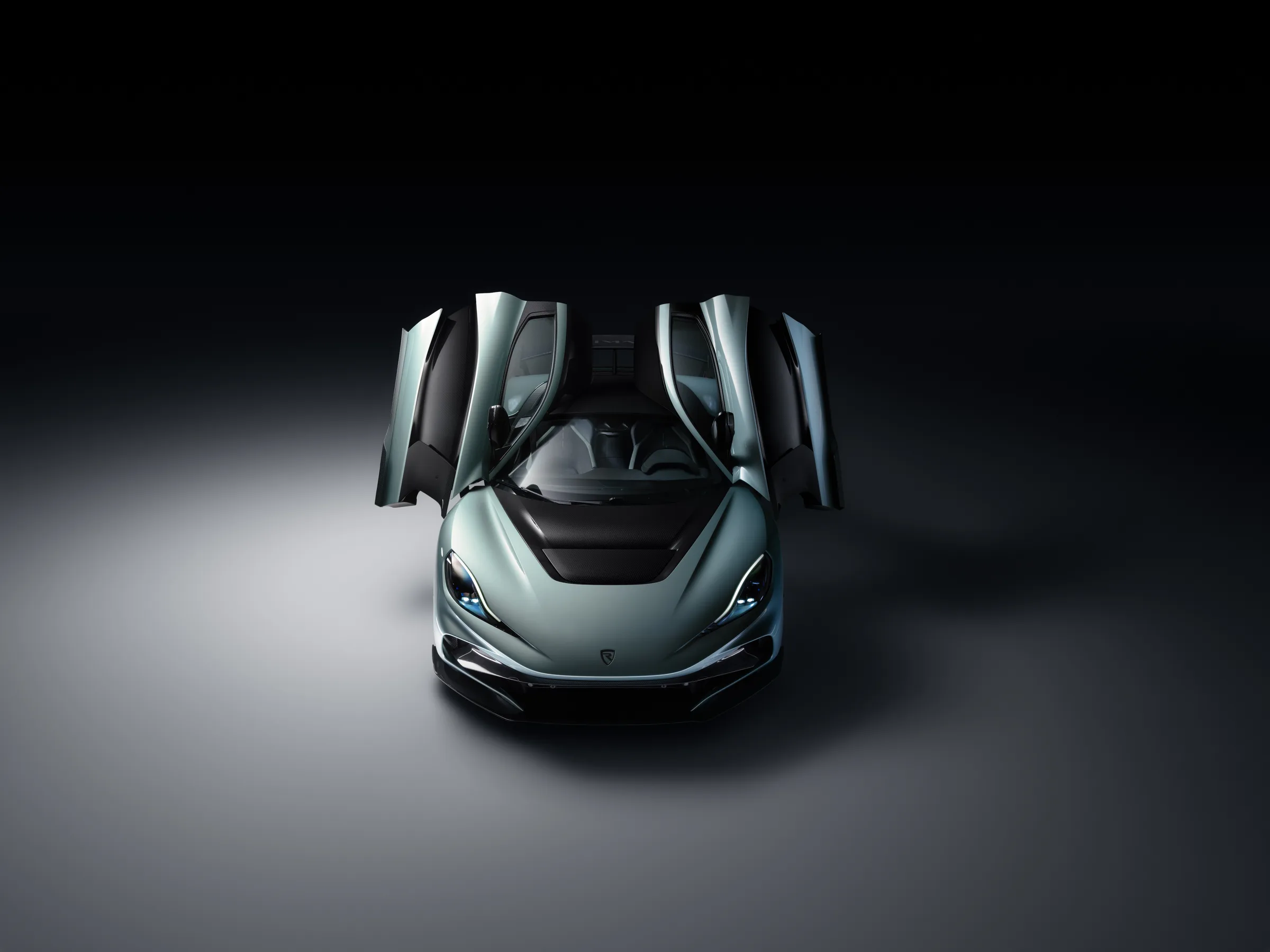
"This is it. This is the car I had in mind when I embarked on the 'impossible' journey ten years ago. This car was born to outperform, and to raise the bar, redefining the norm for performance cars."
No central engine, no conventional gearbox — four independent motors drive four wheels directly, while the torque vectoring system recalculates each wheel's share 100 times every second.
This is where the Nevera parts ways with every combustion hypercar: power is not one engine split by a gearbox, but four independently and continuously controllable torque sources.
Two carbon-sleeve permanent-magnet motors on the front axle, each 226 kW / 270 Nm; two at the rear, each 450 kW / 900 Nm. Rimac's All-Wheel Torque Vectoring (R-AWTV) distributes positive or negative torque to each wheel 100 times per second — traction, single-wheel slip control and cornering attitude are all managed with torque itself, not just the brakes.
Pick a scenario or drag the sliders, and see where R-AWTV sends the 2,340 Nm of motor torque. Values are an illustrative simulation, not actual calibration.
Front wheels capped at 270 Nm · rear wheels at 900 Nm (single-motor peak)
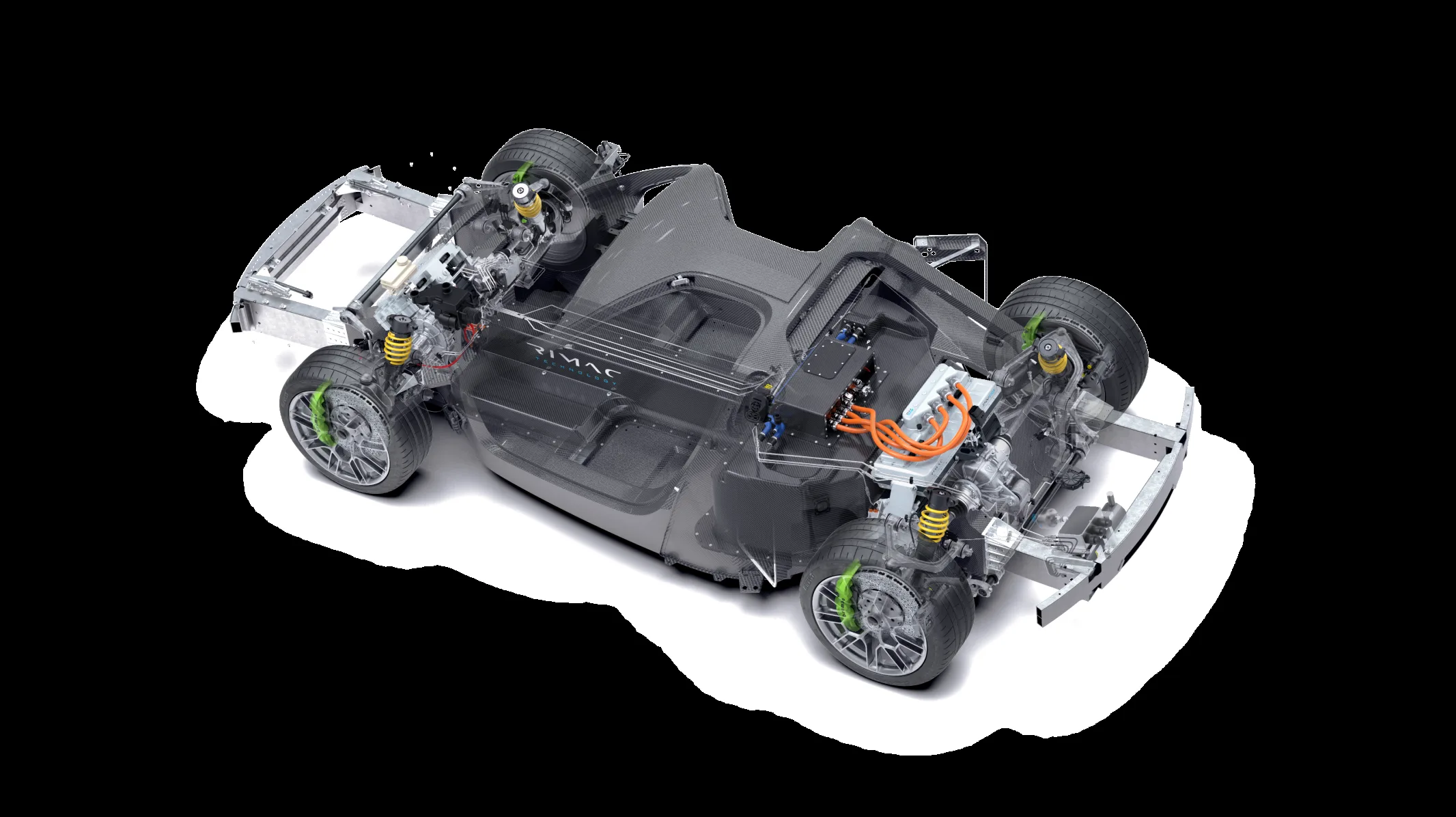
A carbon-fiber monocoque with the battery pack as a structural member forms the skateboard chassis; four motor-and-single-speed-reducer units sit at the corners. Official engineering cutaway: orange for high-voltage cabling, yellow for dampers.
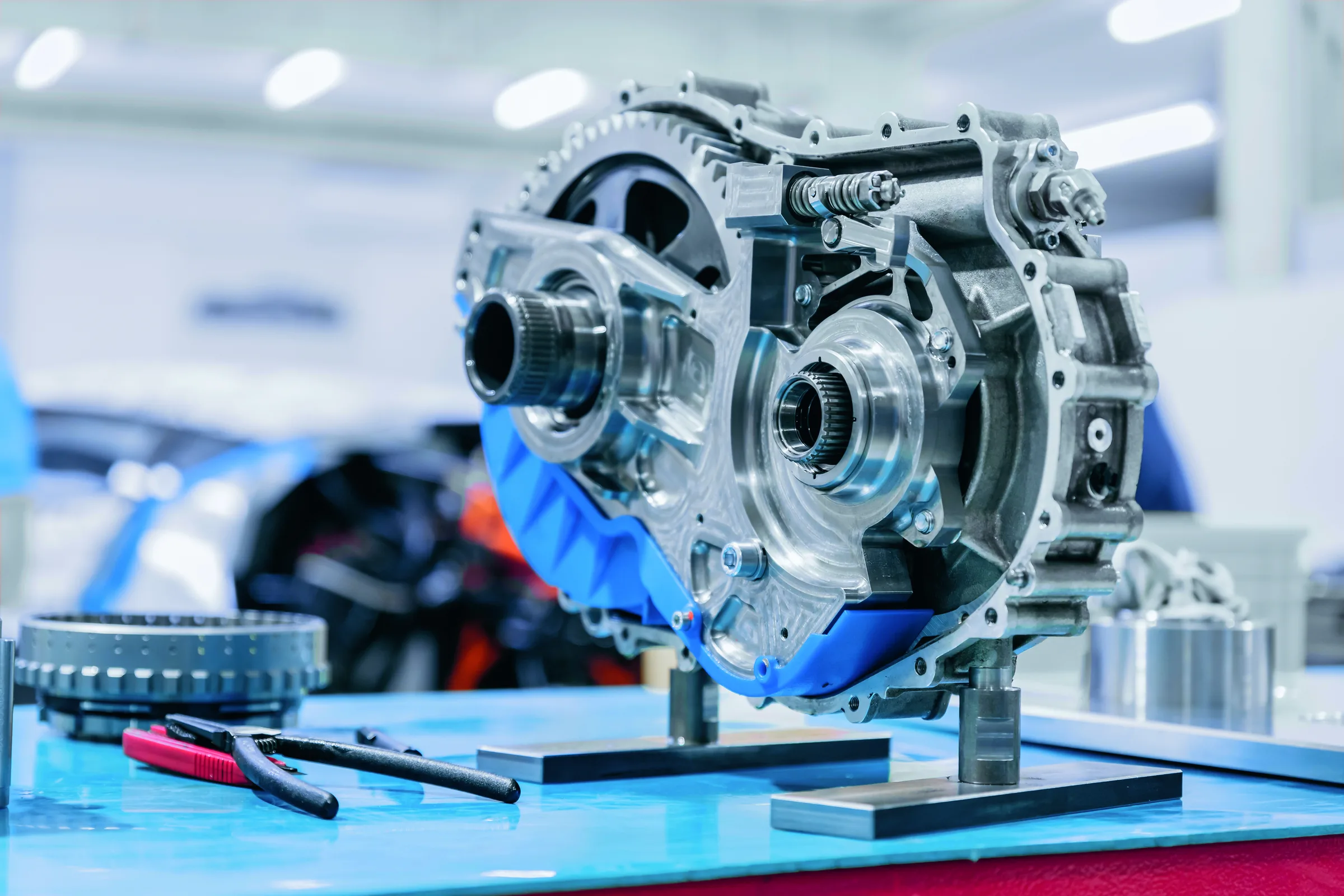
Each drive unit integrates motor, inverter and a single-speed reduction gear. The front axle uses two independent single-speed gearboxes; the rear houses a dual-motor, single-housing design — no gearshifts, so no shift interruption.
ENGINEERING
The same battery and e-drive capability is supplied to global carmakers under the Rimac Technology name — from hypercars to volume EV platforms. The two businesses validate each other.
From CNC-milling a badge to laying carbon fiber by hand, mixing paint and stitching seats — each Nevera takes around five weeks to build, at up to 50 cars a year.
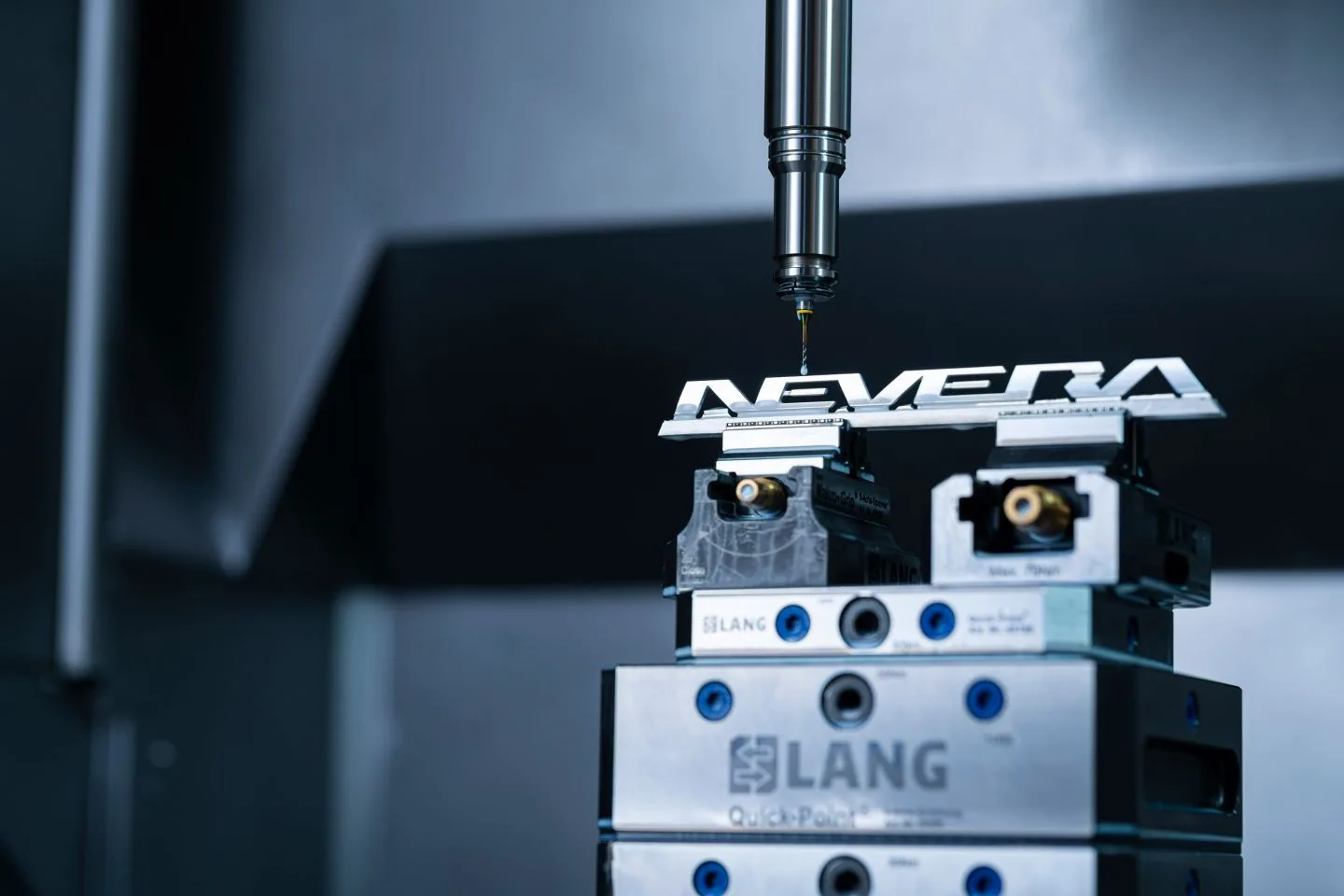
Each NEVERA letterform is CNC-milled from aluminum bar, to micron tolerances.
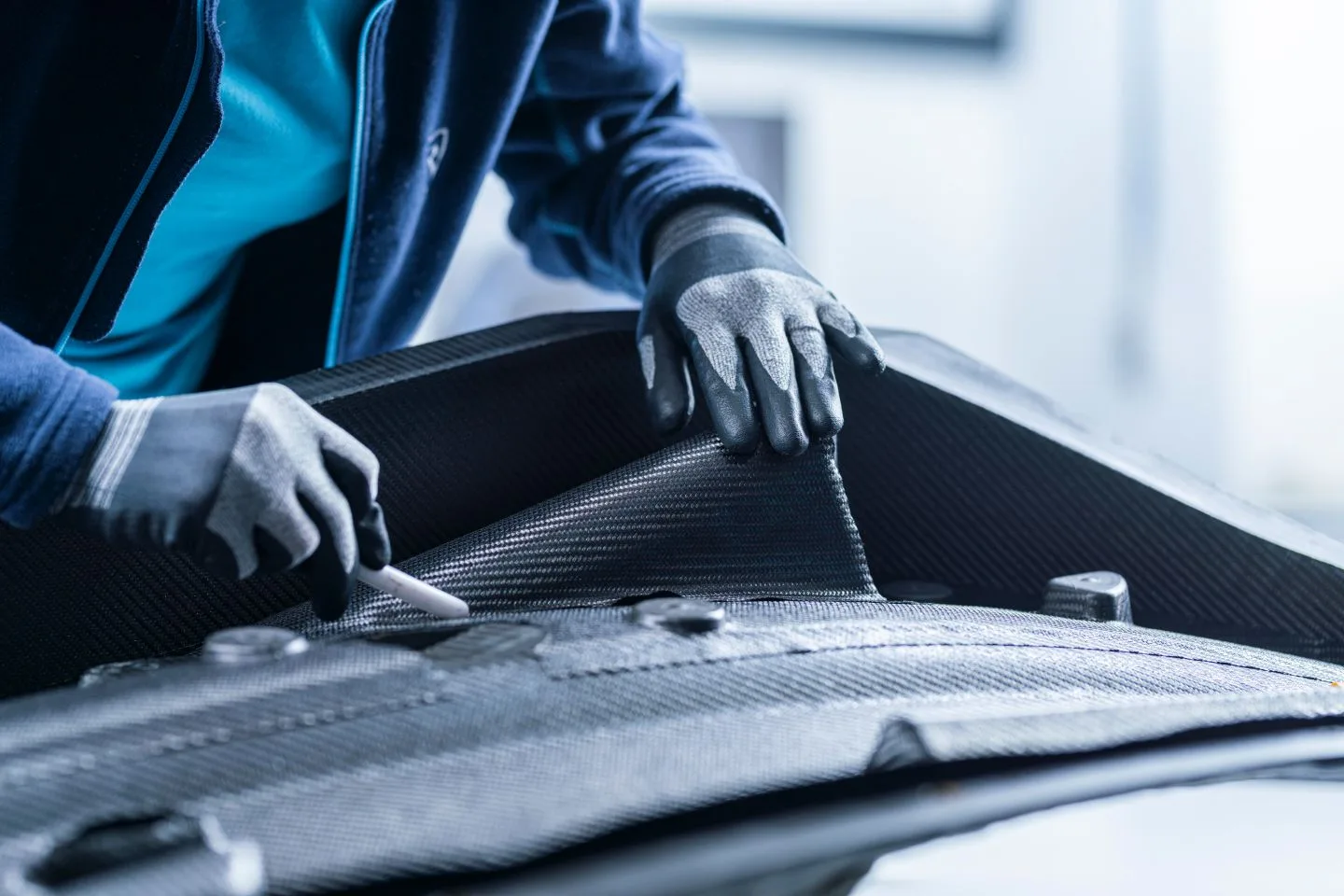
Large structural carbon components are laid and finished by hand — the weave is visible to the eye.
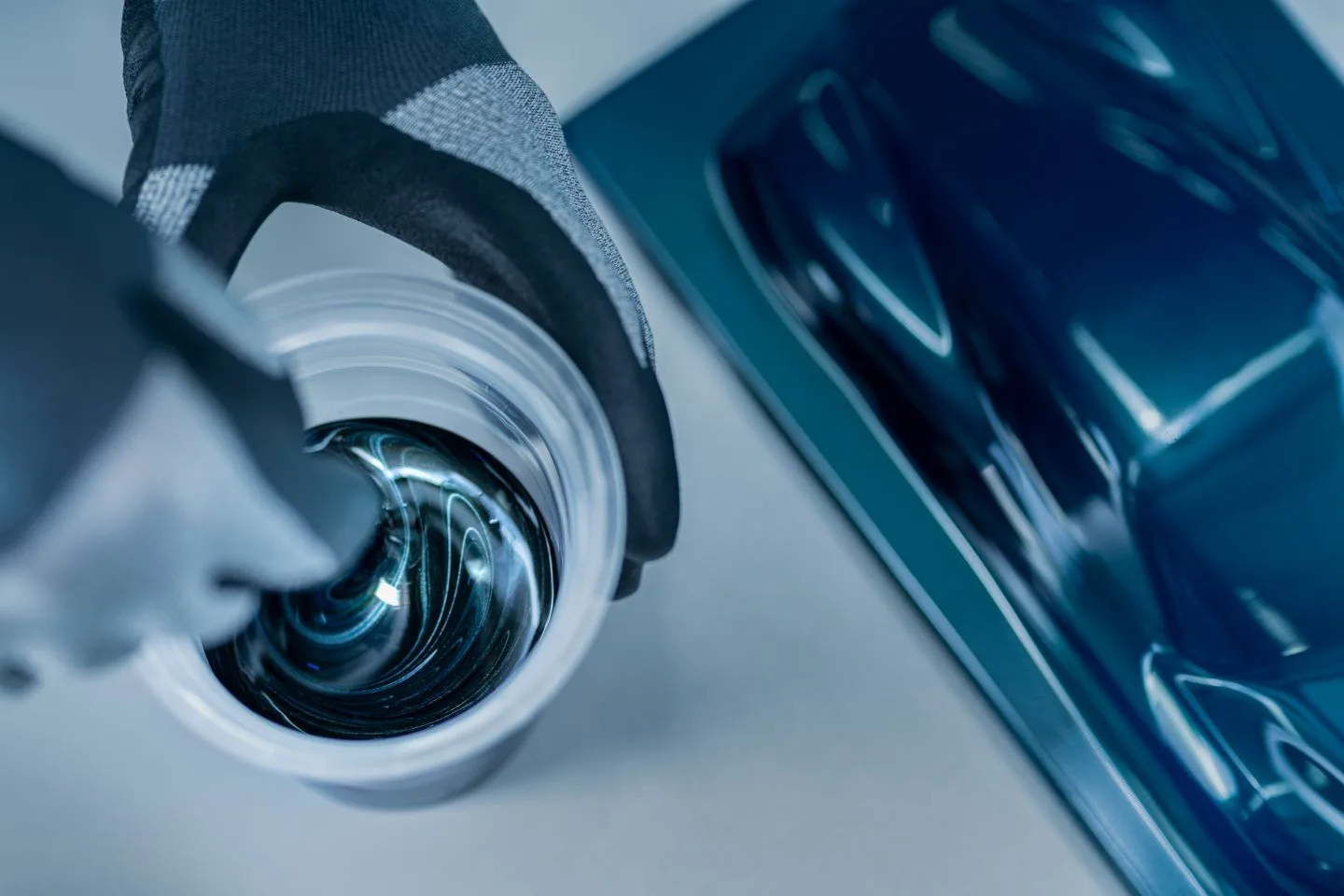
Every metallic paint is mixed and matched individually — 36 standards, bespoke on request.
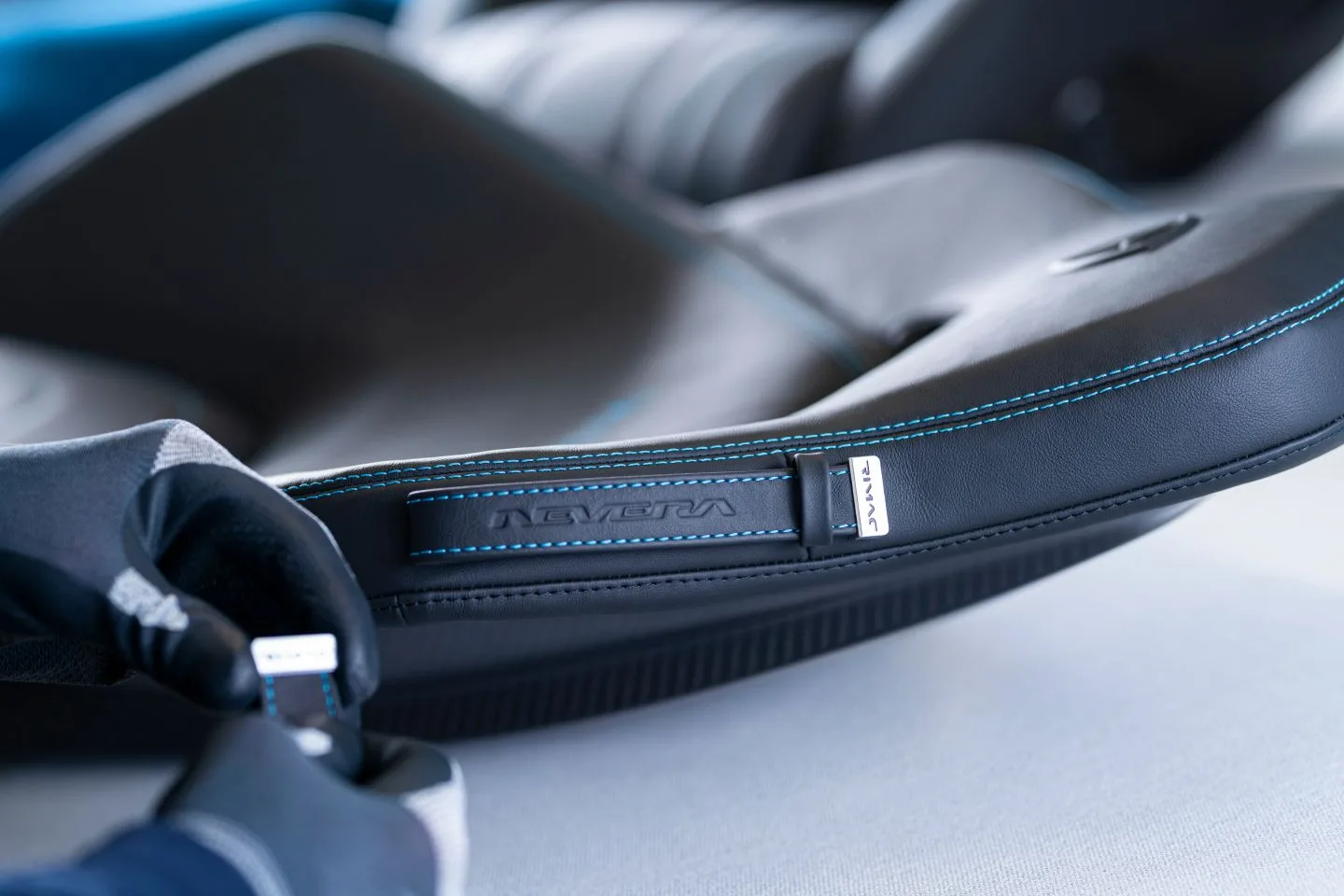
Leather and thread specified per car, NEVERA embossed into the bolster — no two cars alike.
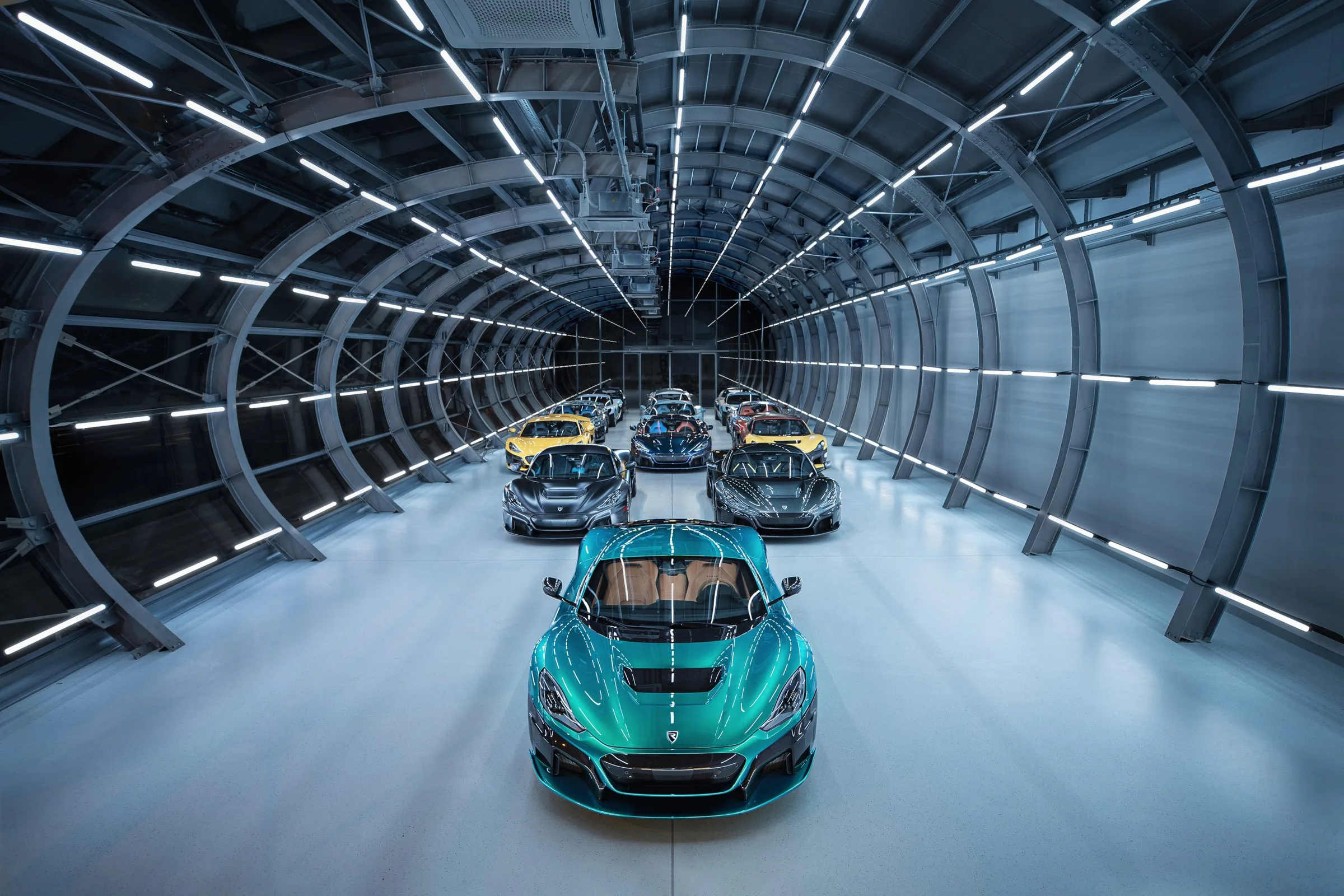
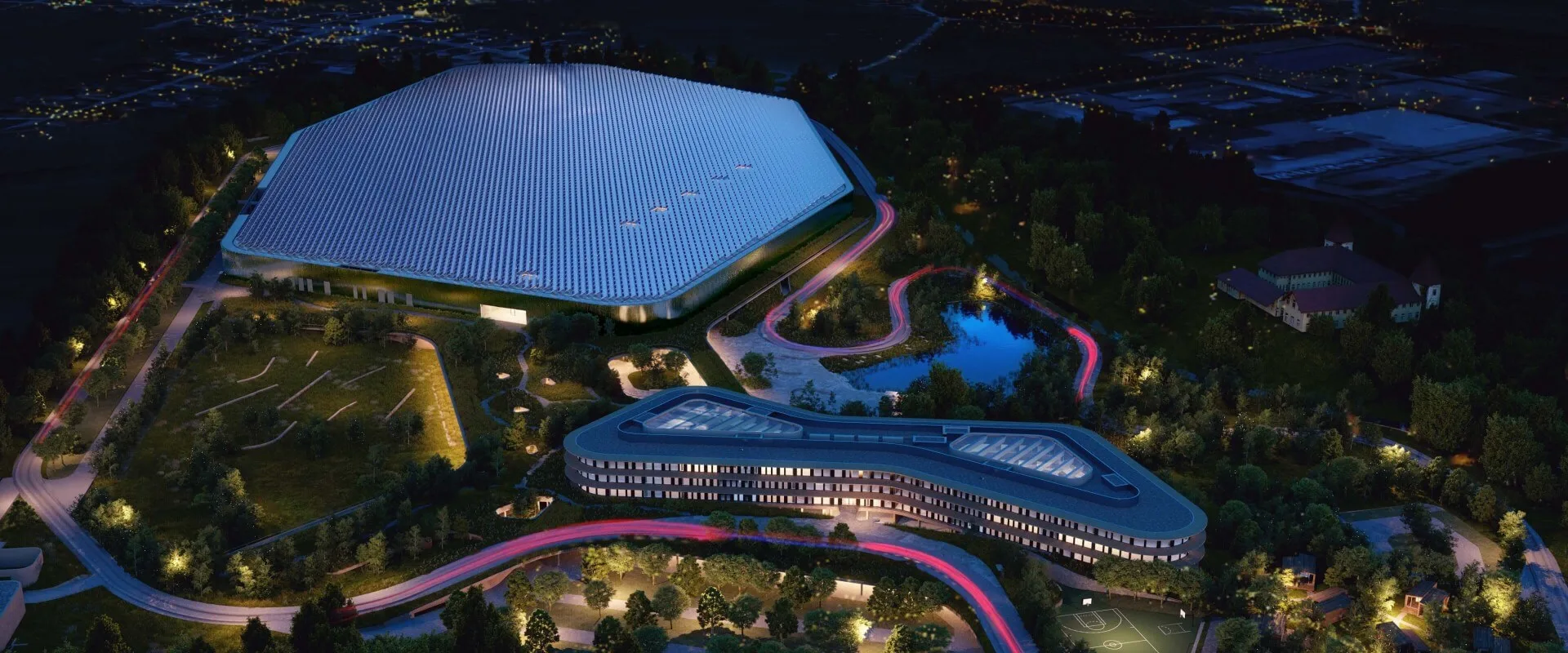
Phase one of the Rimac Campus near Zagreb was completed in 2024: 75,000 m² of production space, €120M invested to date. Final assembly, composites, CNC, trim and paint for Nevera and Nevera R all happen here, alongside three high-voltage battery lines serving European premium carmakers.
May 17, 2023, ATP Papenburg: 23 performance records in a single day. Driver: Rimac test driver Goran Drndak. Verification: RaceLogic and Dewesoft, independently.
17.05.2023 · ATP PAPENBURG
A 4.0 km straight, Michelin Cup 2R road tyres, unprepped asphalt, standard one-foot rollout. The record car's livery honored the record-setting electric BMW e-M3 of 2011.
Ten of the 23 records shown; the full list is in the official Rimac press release (2023-05-17).
"Today, I am proud to say that the car we've created can get to 400km/h and back to 0 in less time than it took the McLaren F1 to accelerate up to 350km/h. And not only that, but it can do it again and again."
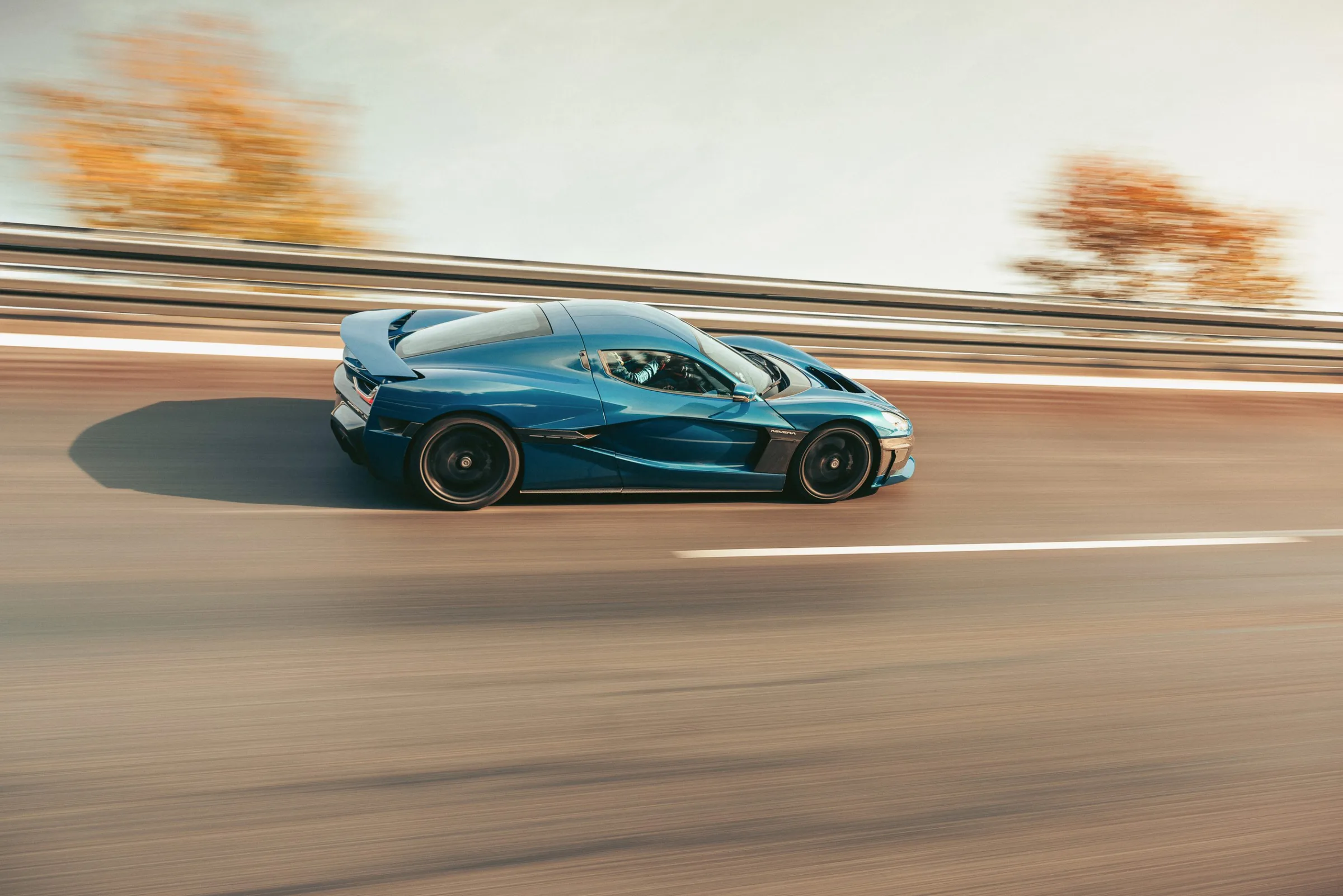
ATP Papenburg's two 4 km straights, measured by RaceLogic V-Box, driven by Chief Test and Development Driver Miro Zrnčević on Michelin Cup 2R tyres with Michelin engineers in attendance. 412 km/h — the target the C_Two had set in public in 2018, honored after 1.6 million cumulative development hours. Customer cars leave the factory limited to 352 km/h; the full speed is unlocked only at manufacturer-supervised events.
"To travel at 412kph, or 258mph, means travelling at a third of the speed of sound," said Zrnčević — and the same car still crosses continents on a charge, devours tight tracks and drifts. Acceleration and V-MAX records, one car.
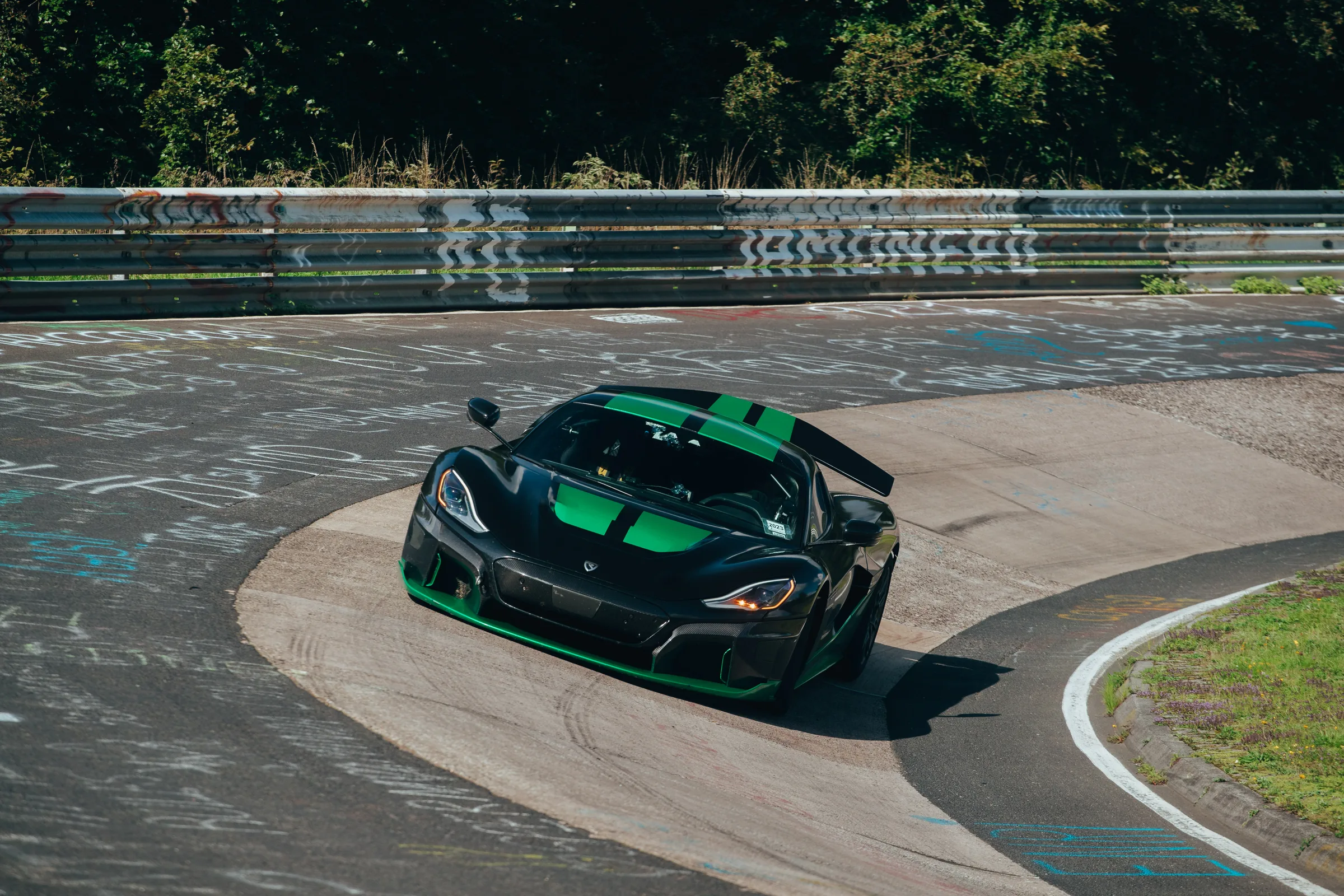
Rimac's first assault on the Nürburgring: the lap came from virtual performance optimization and only about 20 laps of industry pool testing; the practice week brought changeable weather and the timed day was one of the hottest of the year. 7:05.298 over the full 20.832 km (7:00.928 on the 20.6 km layout) — 20 seconds under the previous production-EV record, independently verified by TÜV SÜD. Martin Kodrić driving, Michelin Cup2R.
"Gentle and usable in the city, thrilling to drive on twisting B-roads, comfortable over long distances and devastatingly fast on a race track." — Martin Kodrić
"Breaking records with the Nevera is a testament to the innovation and dedication of the Rimac team. I'm proud of what we achieved in our first time at the Nürburgring. Our virtual performance optimization, combined with only about 20 laps of industry pool testing, led to a great result."
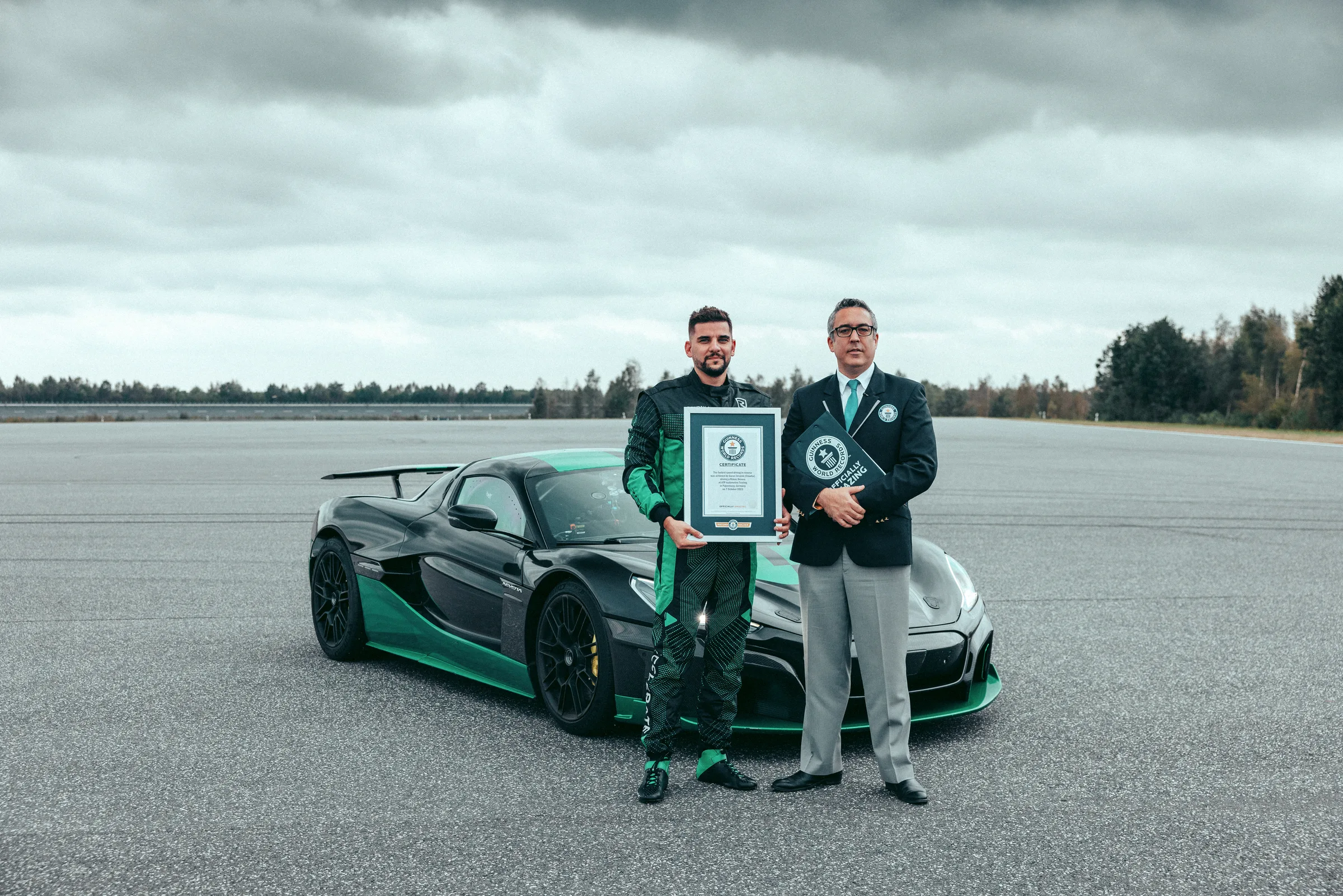
Four motors can spin the wheels backwards at full power. On November 7, 2023, Goran Drndak drove 171.34 mph (275.74 km/h) in reverse at ATP — witnessed by Guinness, verified by Dewesoft. The Miura reached that speed forwards with a V12, in 1967.
"It definitely took some getting used to. You're facing straight out backwards watching the scenery flash away from you faster and faster, feeling your neck pulled forwards in almost the same sensation you would normally get under heavy braking," said Drndak. "Despite it being almost completely unnatural to the way the car was engineered, Nevera breezed through yet another record."
Famoso · 1/4 mile
Famoso Raceway, California, on standard Michelin Pilot Sport 4S road tyres: the world's fastest-accelerating production car. Driven by Brooks Weiselblat of DragTimes — 11 consecutive launches, no degradation.
Goodwood hillclimb · production record
The production-car hillclimb record at the 2023 Festival of Speed; the same Time Attack-liveried Nevera took the Nürburgring a month later.
Nevera Time Attack
A limited edition for the record year, its black-and-green livery honoring the record-setting electric BMW e-M3 of 2011; premiered at The Quail the day of the Nürburgring record — all spoken for.
Revealed August 16, 2024: from Hyper GT to Hyper Sportscar — 2,107 hp, a new 108 kWh battery, a fixed great wing. Limited to 40 units.
NEVERA R · 2024
Same quad-motor architecture, lighter battery, more power, more downforce — every change points at one thing: corner speed.
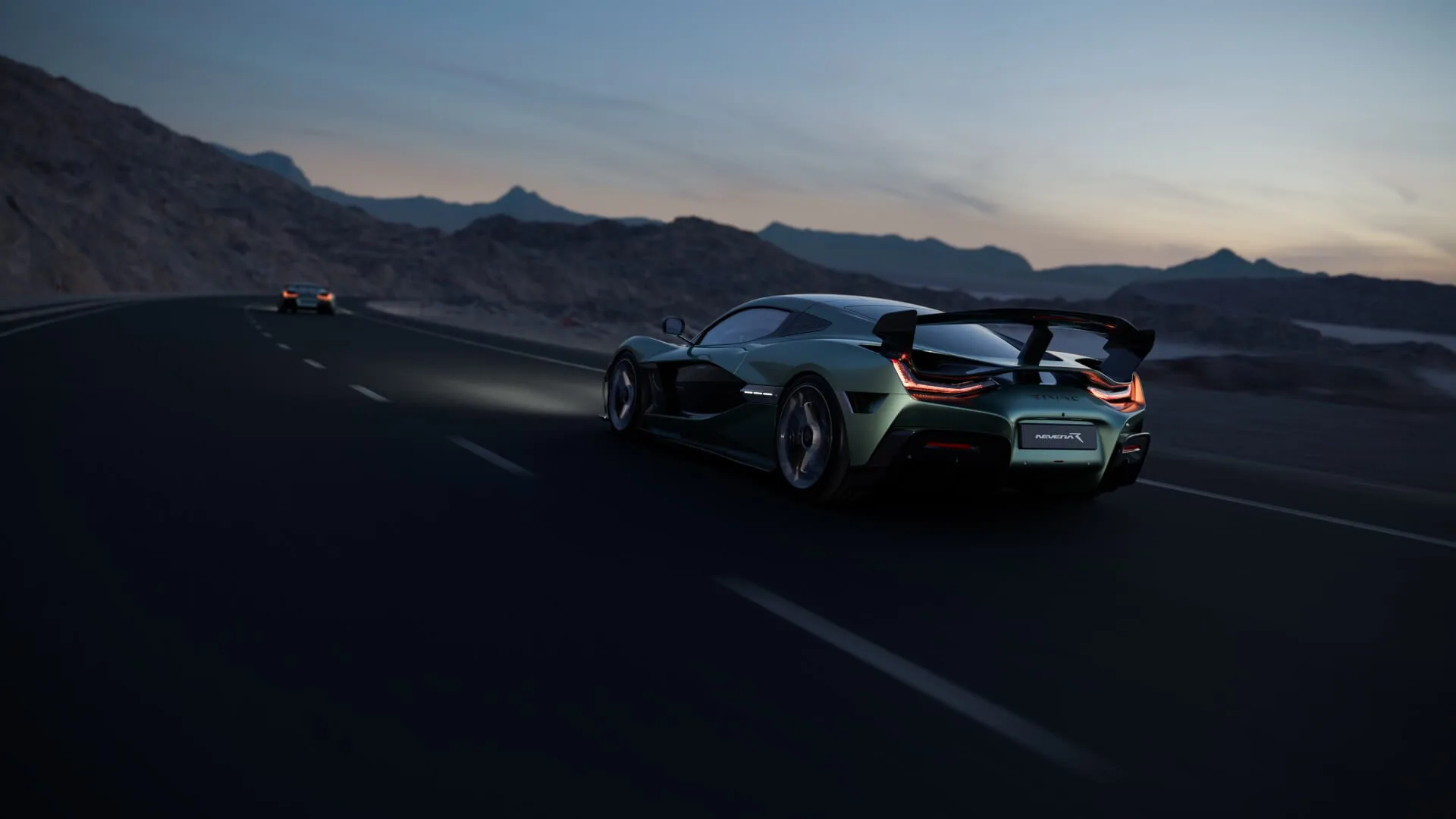
Over the standard Nevera: 15% more downforce, 10% better aerodynamic efficiency. New Michelin Cup 2 tyres cut total understeer by 10% and add 5% lateral grip — 3.8 seconds faster around the Nardò handling track. Launch color Nebula Green evolved from the Time Attack's Lightning Green.
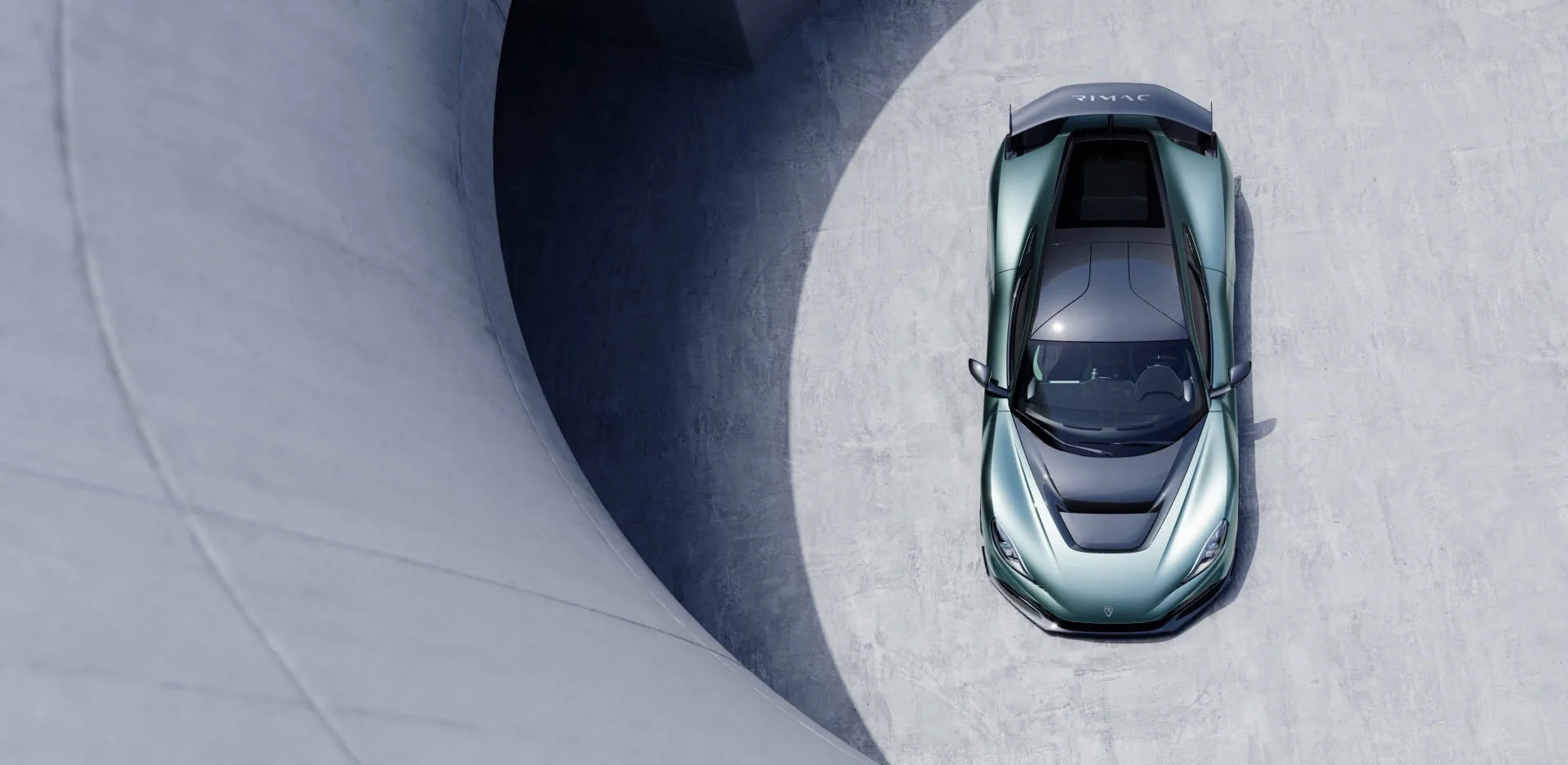
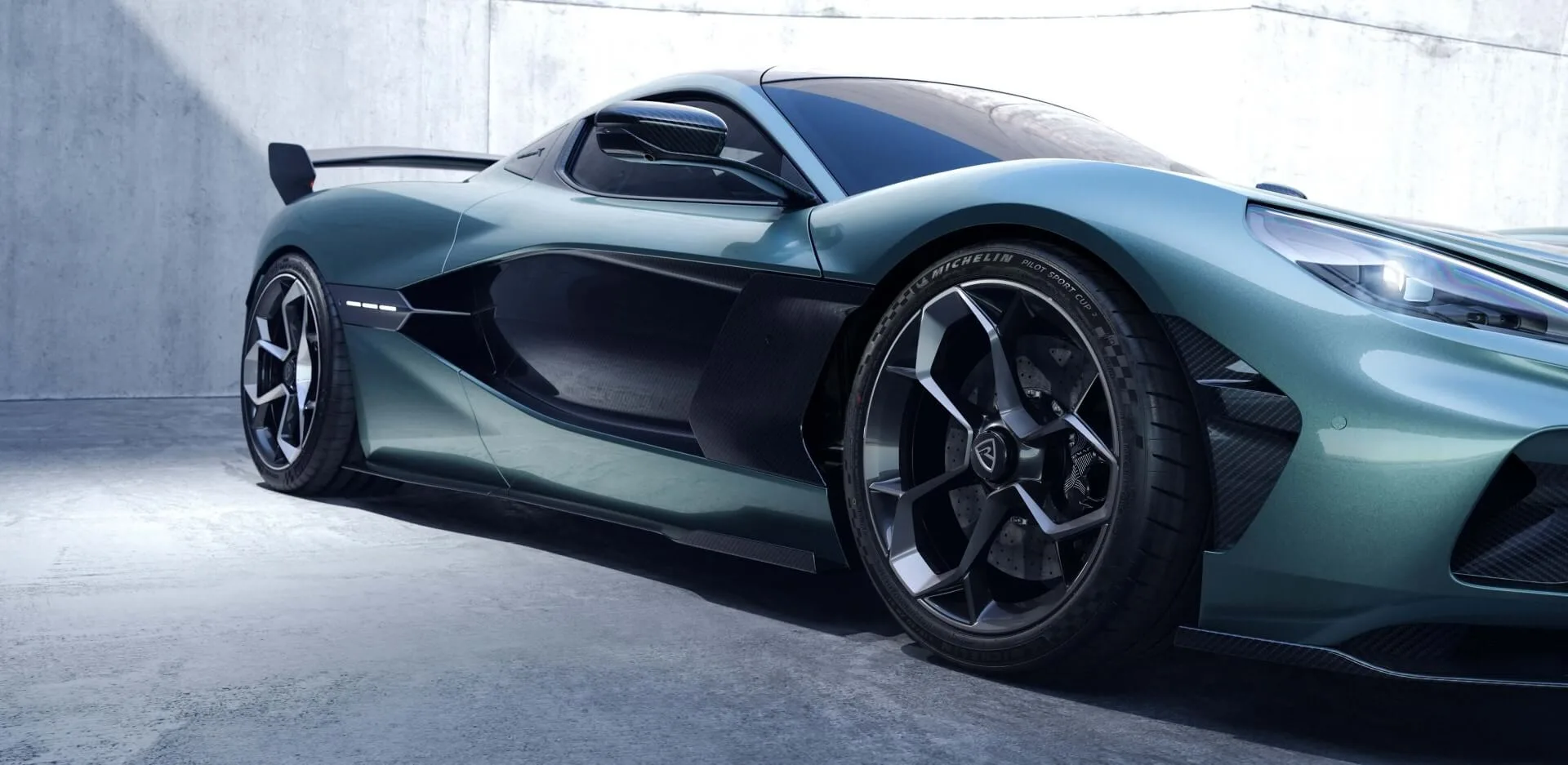
20/21-inch two-tone designs, center-lock; increased rear negative camber keeps the outside rear planted.
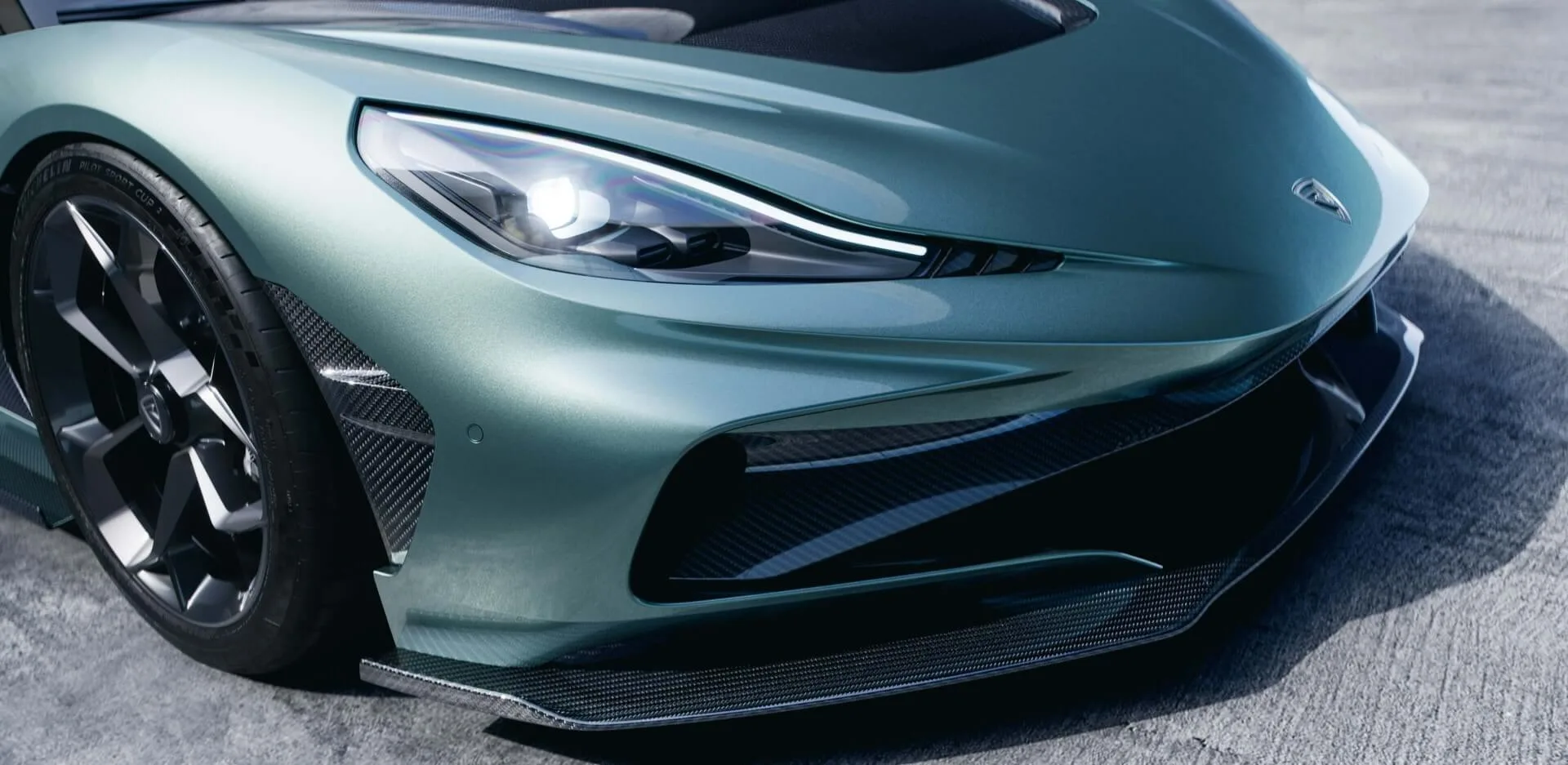
Hood vents and splitter flicks emphasize width and stance — every opening has a cooling or aero reason.
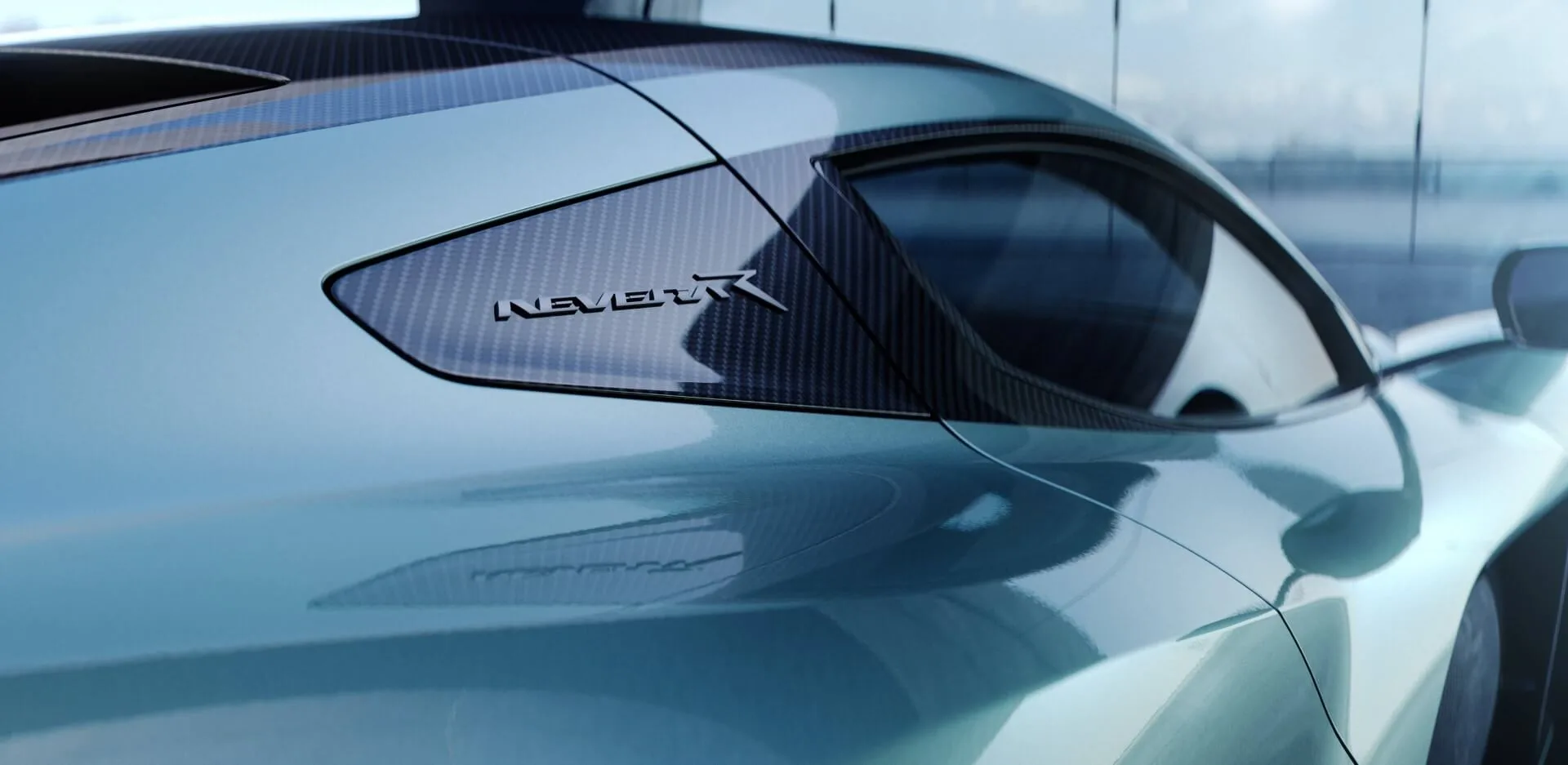
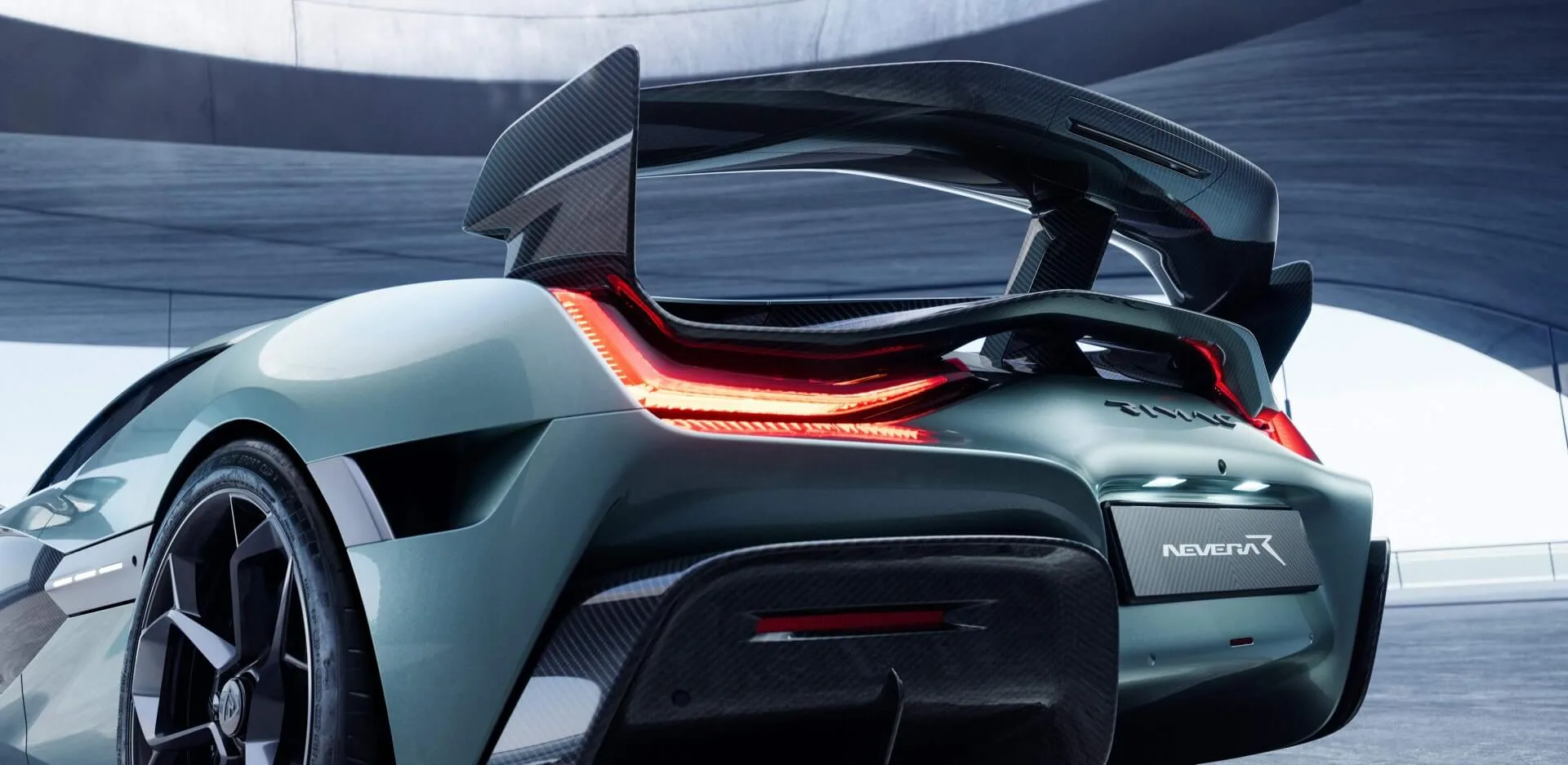
'NEVERA R' etched into the carbon panel — the R's name, on the structure closest to the driver.
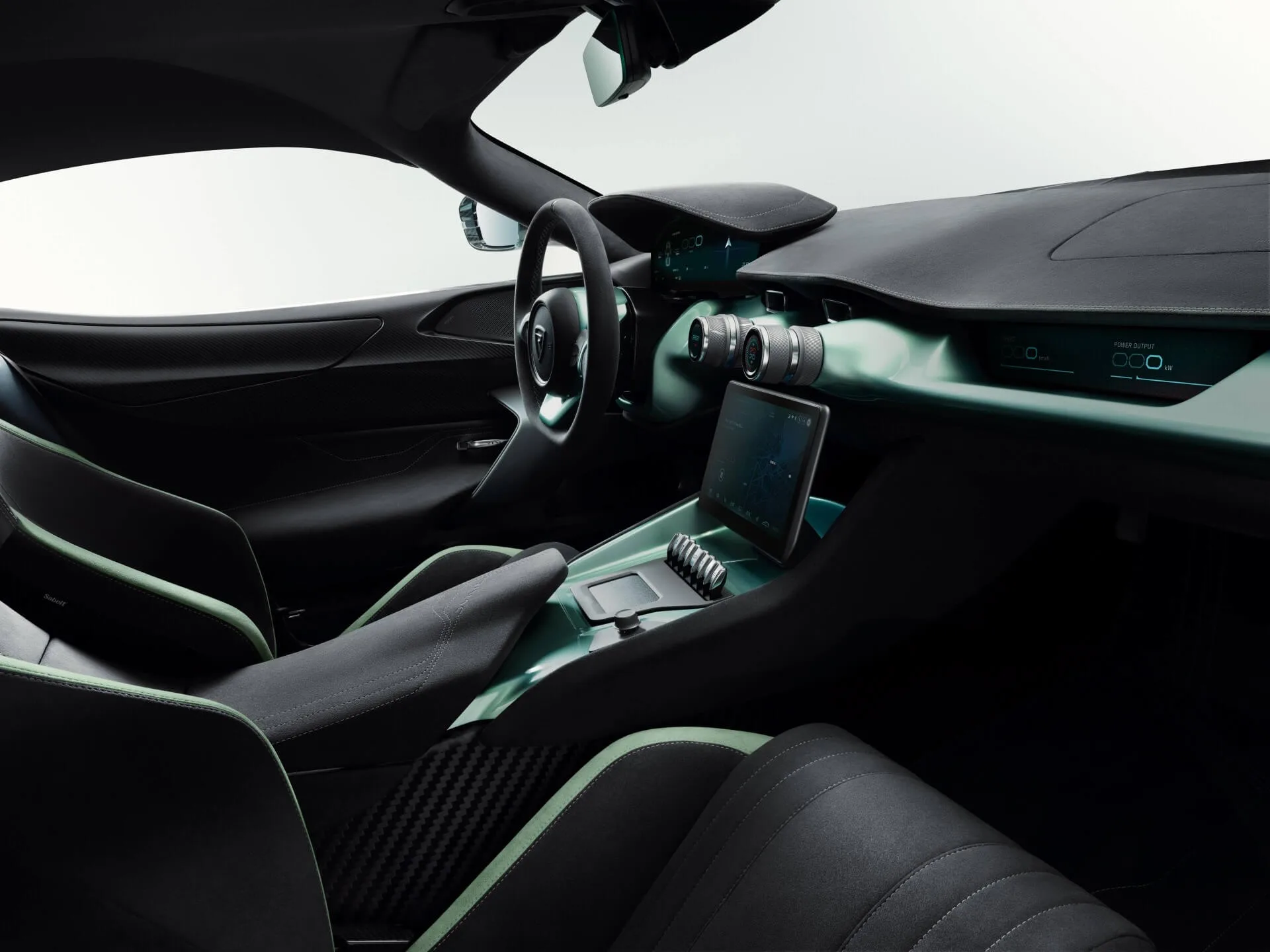
The main dash structure and console use painted carbon fiber, color-matched to the body or personalized freely; the passenger display streams live lateral/longitudinal g and power output. Rotaries, stitching and anodized switchgear are all open to specification.
Two years later, on the same Papenburg straight: in its final validation before customer deliveries, the Nevera R set 24 records in one day — rewriting every single one held by the standard Nevera.
Final validation in high-speed mode: 0–100 km/h in 1.72 s, 0–300 in 7.89 s, 0–400 in 17.35 s, then full braking — 25.79 s in total, 4.14 s quicker than two years before. Top speed 431.45 km/h took the production-EV record; every figure independently verified by Dewesoft.
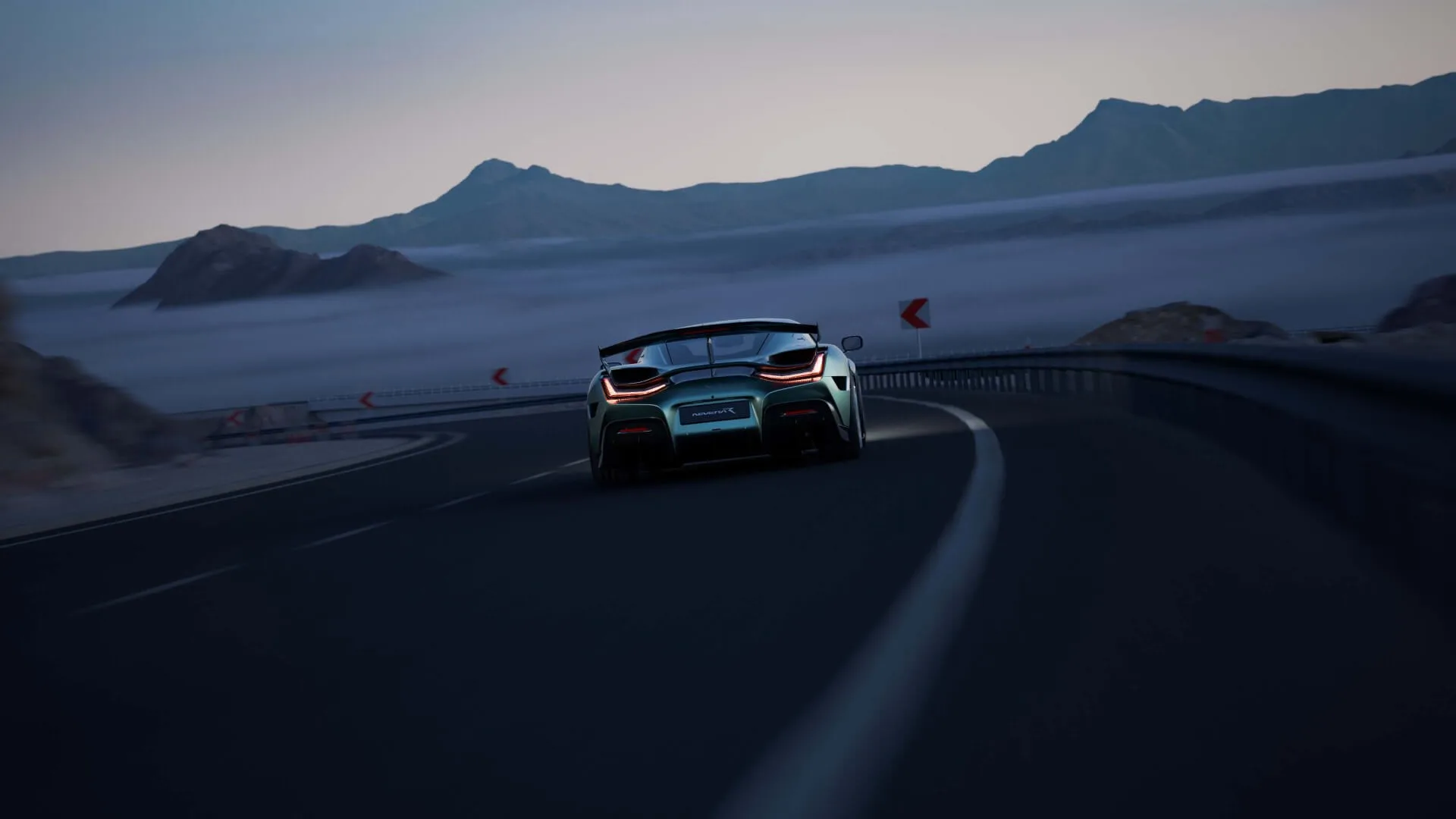
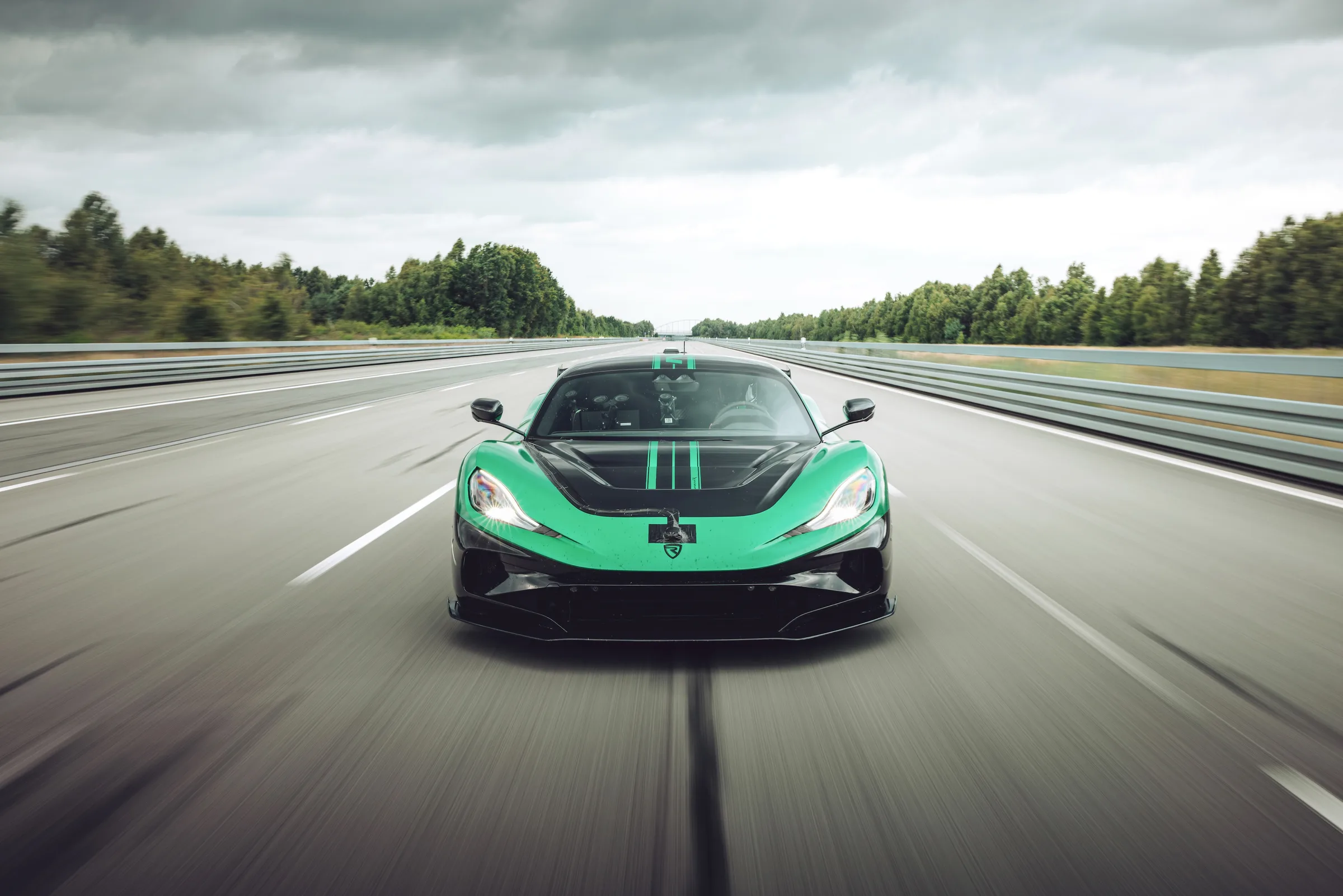
"In a single generation, we had created a performance jump that previously would have taken decades. But now, through relentless innovation, Nevera R goes even faster. Breaking records is in our DNA, and we won't stop here."
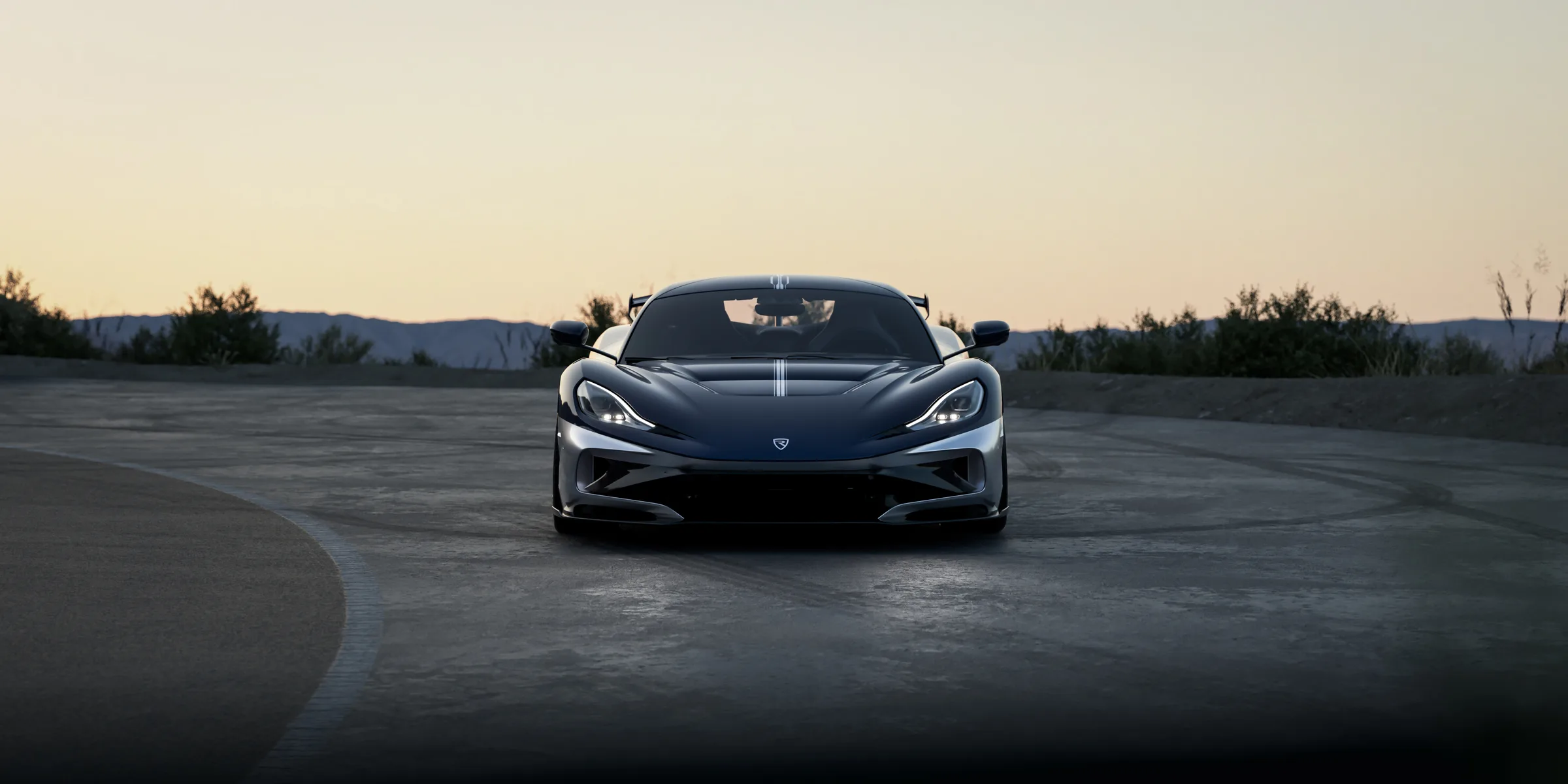
At the top of the Nevera R family sits the Founder's Edition: ten cars worldwide, all allocated within a week of their private announcement in August 2025. The first was delivered on the frozen lake at St. Moritz on January 30, 2026 — Côte d'Azur blue over Titanium Silver, a 2 mm central roof stripe woven with the cravat motif and circuit-board graphics. Each one is handed over by Mate Rimac personally.
Both cars, side by side. Sources: Rimac's official model pages, the official technical specification document and press releases.
Nevera R outputNevera: 1,914 hp
Fastest EV top speed2025 · Nevera R, measured
0–100 km/hNevera: 1.81 s
0–400–0 km/hNevera: 29.93 s
Nevera figures from the official Technical Specifications (2023-11, download PDF) and the official model page; Nevera R figures from the 2024-08-16 launch release and the 2025-07-09 record release (Dewesoft-verified), with the official-site top speed noted alongside. Acceleration records use the standard one-foot rollout.